


Capsulitis is a common cause of forefoot and toe joint pain, most often affecting the second toe but also seen in the big toe, third or fourth toes. It occurs when the soft tissue structure that surrounds a toe joint – known as the joint capsule – becomes inflamed due to repeated pressure and overload.
At Advance Foot Clinic, we regularly treat patients with capsulitis foot pain who experience discomfort in the ball of the foot, difficulty walking, or instability in an affected toe. While capsulitis may begin gradually, it can progress if left untreated, leading to joint instability, deformity and ongoing pain. Early assessment and targeted podiatry care can significantly reduce symptoms and help prevent long-term complications.
Capsulitis develops when the ligaments that stabilise a toe joint are subjected to excessive pressure over time. These surrounding ligaments help keep the toe aligned and stable during walking and standing.
When abnormal loading occurs, the toe joint takes more force than it can tolerate. This leads to inflammation, irritation and weakening of the joint capsule. In the earlier stages, symptoms may be mild. In more advanced stages, the toe can become unstable, painful and begin to drift from its normal position.
Capsulitis most commonly affects the second toe joint, but may also involve the big toe or other joints in the forefoot.
Capsulitis commonly affects people who place repeated stress through the forefoot. You may be more likely to develop capsulitis if you:
Capsulitis can affect people of all ages and activity levels and may develop gradually or following a change in activity, footwear or workload.
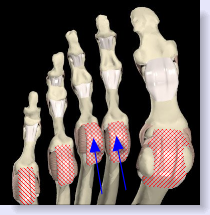
Symptoms of capsulitis vary depending on the joint involved and the stage of the condition. Common symptoms include:
In second toe capsulitis, symptoms often worsen as the toe starts to lift or drift, leading to toe deformities such as crossover toe.
Capsulitis usually develops due to a combination of contributing factors rather than a single cause. Common causes include:
Identifying the underlying cause is essential to effectively treat capsulitis and prevent recurrence.
Second toe capsulitis – or 2nd toe capsulitis – are closely associated with predislocation syndrome. This condition occurs when the supporting ligaments of the second toe joint weaken, allowing the toe to gradually shift out of alignment.
In the early stages, pain may be intermittent. As the condition progresses, the toe may lift, drift or cross over adjacent toes. Early treatment is critical to prevent permanent deformity and the need for surgical intervention.
Capsulitis is diagnosed through a comprehensive podiatry assessment. Your podiatrist will assess:
In some cases, X-rays may be used to rule out fractures, arthritis or other joint conditions.
Treatment aims to reduce pain, stabilise the joint and address contributing factors. At Advance Foot Clinic, treatment is tailored to your symptoms and stage of presentation.
In some cases, oral medications or steroid injections may be considered to help reduce inflammation. Surgery is typically only considered in advanced cases where conservative care has not been effective.
Capsulitis foot exercises may be recommended as part of a broader treatment plan, particularly in the earlier stages of the condition. Exercises aim to support joint stability, flexibility and muscle control.
Exercises should be performed under professional guidance. Incorrect or aggressive exercise can worsen symptoms and delay recovery.
When capsulitis is left untreated, inflammation can progress, leading to:
Early recognition and treatment can help prevent these outcomes and support long-term foot health. If left unchecked for too long, surgical approaches such as joint pinning, tendon release or even amputation will be the only course of treatment.
You should seek treatment if you experience:
Ready to give your feet the care they deserve? Book your appointment online or call us and experience our expert podiatry services at any of our six clinic locations.