


Noticed tiny pits on the soles of your feet – perhaps along with sweaty or smelly feet? You could be dealing with pitted keratolysis. Pitted keratolysis is a superficial bacterial skin infection that usually affects the soles of the feet, particularly the heels, balls of the feet and other weight-bearing areas.
The condition causes clusters of tiny, crater-like pits or small holes in the outer layer of the skin, known as the stratum corneum. It’s sometimes called keratolysis plantare sulcatum, ringed keratolysis or, more informally, crumpet foot because of the pitted appearance it creates.
While the pits themselves can look concerning, pitted keratolysis can be treated. The key is identifying the infection and tackling the warm, damp conditions that allow the bacteria to thrive.
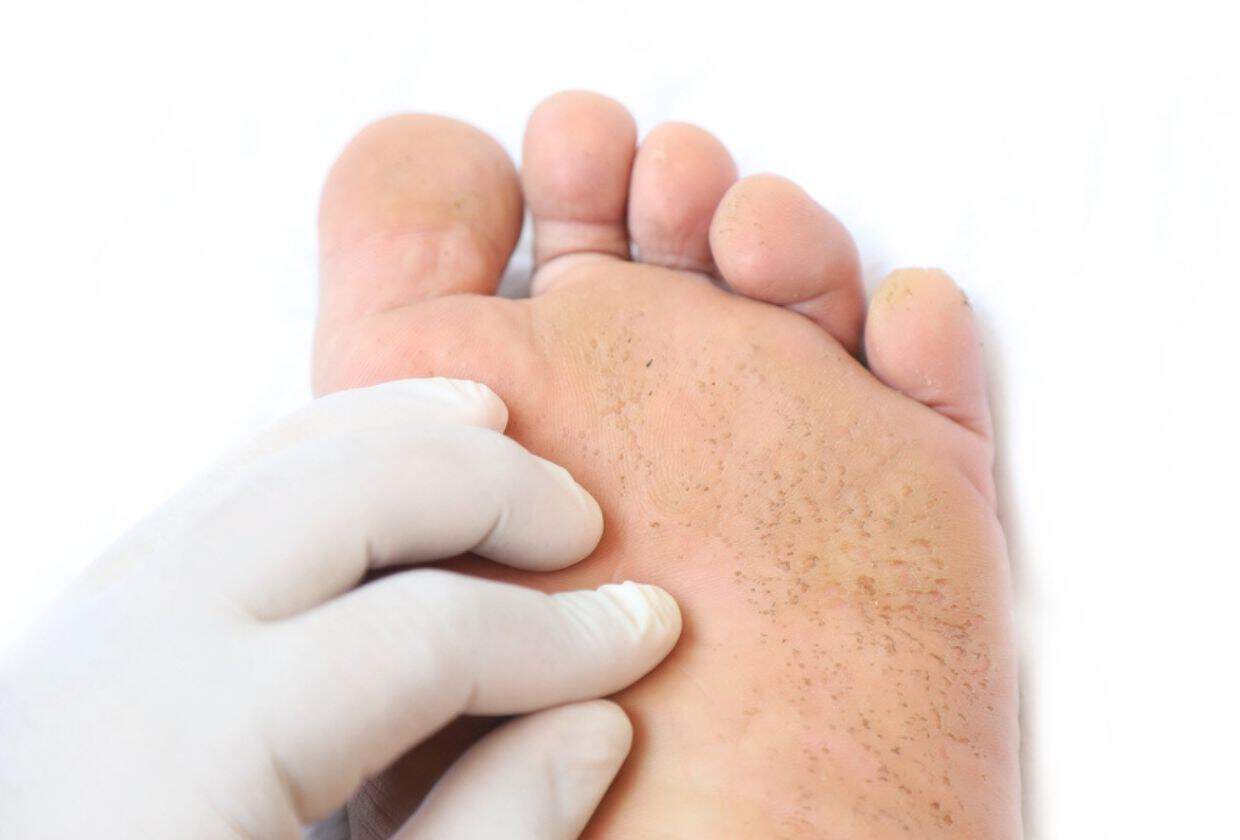
The tell-tale sign of pitted keratolysis is shallow, crater-like pitting, usually on the pressure-bearing areas of the feet. These pits may become easier to see when your feet are wet and can sometimes join together to create larger lesions or irregular erosions.Other symptoms can include:
For many people, the condition doesn’t hurt at all. Symptomatic pitted keratolysis, where there is itching, soreness or discomfort, is less common. Often, it’s the pitting or persistent foot odour that people notice first.
Although plantar pitted keratolysis mainly affects the feet, it can occasionally occur on the palms. Pitted keratolysis on the hands is rare and is generally associated with prolonged exposure to wet environments.
Other conditions, including fungal infections and plantar warts, can sometimes cause similar-looking changes. If you’re not sure what’s happening with your skin, having your feet assessed is a good place to start.
Pitted keratolysis is caused by several bacterial species that can live on the skin. Corynebacteria are commonly associated with the condition, along with bacteria such as Kytococcus sedentarius and Dermatophilus congolensis.
So, where do those little pits come from?
When the feet stay warm and damp, these bacteria have an ideal environment to multiply. They can produce protease enzymes that break down proteins in the stratum corneum, creating the characteristic crateriform pitting.
The bacteria also produce compounds that contribute to that distinctive foot odour.
The main risk factors have one thing in common – they tend to keep your feet warm, sweaty or damp.
These include:
This is why pitted keratolysis has historically been reported among groups such as military personnel and paddy field workers, whose feet may spend long periods in enclosed footwear or wet conditions.
Tradies can be another common group affected, particularly when heavy work boots are worn for long shifts in hot conditions. Spending hours on your feet in work boots can contribute to other foot and leg pain experienced by tradies too.
But you certainly don’t need to work in one of these occupations to experience it. Anyone can develop pitted keratolysis when the right combination of bacteria, moisture and warmth is present.
And importantly, it doesn’t necessarily mean your feet aren’t clean. Even people with good foot hygiene can develop the infection, particularly if they have sweaty feet.
If you’re wondering ‘How is pitted keratolysis treated?’ It depends on:
Pitted keratolysis diagnosis is primarily by examining the skin. Your podiatrist will look at the appearance and location of the pits and may ask about other symptoms, including sweating and foot odour.
A pitted keratolysis diagnosis can often be made from its characteristic appearance. However, fungal infections, plantar warts and other skin disorders can sometimes look similar, so it’s worth getting the right diagnosis before starting treatment.
In less straightforward cases, further investigation may be recommended.
Pitted keratolysis is sometimes discussed as part of the overlooked corynebacterial triad, alongside two other superficial bacterial skin conditions – erythrasma and trichobacteriosis.
Once pitted keratolysis is diagnosed, pitted keratolysis treatment generally has two goals – treating the bacterial infection and changing the conditions that are helping the bacteria thrive.
How pitted keratolysis is treated will depend on your symptoms and individual circumstances. A healthcare professional may recommend antimicrobial treatments, including topical antibiotics such as clindamycin, erythromycin, mupirocin or fusidic acid. Benzoyl peroxide may also be considered in some cases.
Most cases respond well to appropriate treatment and moisture control. Severe cases, persistent symptoms or changes that aren’t improving as expected should be assessed further.
If your feet sweat a lot, treating the infection may only be part of the picture.
Managing excessive sweating can help treat pitted keratolysis and reduce the conditions that allow it to return. Depending on your needs, this could include foot antiperspirants, changes to footwear and simple strategies to keep your feet dry throughout the day.
A few everyday changes can make a real difference when it comes to keeping your feet cool and dry.
Try to:
Keeping your feet clean is important, but keeping your feet dry matters too. Excessive moisture, warmth and enclosed footwear can all create the conditions bacteria love.
If you’ve noticed persistent pits, sweaty feet or a foot odour that just won’t budge, you don’t have to simply put up with it.
Pitted keratolysis generally has an excellent prognosis with appropriate treatment and management of contributing factors. The podiatrists at Advance Foot Clinic can assess your skin, work out what’s causing your symptoms and recommend suitable treatment options.
We’ll also look at the bigger picture – including sweating, moisture and footwear – to help address the factors that may be contributing to the problem.
Book an appointment with Advance Foot Clinic at one of our Queensland clinic locations and take the first step towards happier, healthier feet.