




Most of us know the characteristic feeling of pins and needles. It is known as paresthesia and is a common sensation that is often described as a tingling or prickling feeling. It usually occurs temporarily as a result of short-term compression (such as sitting for too long), however sometimes pins and needles in feet can be a more chronic issue (peripheral neuropathy). So let’s learn why they happen and how to get rid of pins and needles in the feet.
Reasons for pins and needles in the feet
As podiatrists one of the musculoskeletal and skin diseases we see is pins and needles (paresthesia) in the feet. Paresthesia in the feet can occur due to a variety of reasons such as nerve damage (peripheral neuropathy), poor circulation, or even a vitamin deficiency. In some cases, it may be a symptom of an underlying medical condition, such as diabetes or alcoholism. Most patients seem to experience pins and needles most commonly at night laying in bed.
Nerve damage, diabetic neuropathy, and compression
If nerves are compressed or damaged they will start misfiring normal signals to the brain and spinal cord which is then interrupted as the pins and needles tingling sensation. Nerve damage can occur after an injury and may be permanent or temporary pinched nerve depending on the severity. You may notice tingling, pain or numbness. More often than not though, nerve damage occurs due to chronic low-level compression which may not be noticed at first.
Tight footwear, particularly across the forefoot and front of the ankle, is notorious for causing slow-building nerve inflammation and can contribute to Morton’s neuroma or tarsal tunnel syndrome, a condition involving compression of a nerve near the ankle. Think of this similar to the well-known carpal tunnel syndrome, but in the feet! Tarsal tunnel syndrome can also cause shooting pain along with tingling or numbness in the foot. If you notice tingling in your feet during the day, your first check should be the width of your shoes! Footwear changes combined with physical therapy usually resolves the underlying cause and allows the body to restore healthy nerves.
The problem may also be occurring in the spinal cord, as some spinal injuries, disk degeneration, or spinal stenosis can compress the spinal cord or irritate the sciatic nerve, causing a pinched nerve. This nerve compression may lead to referred nerve pain in specific areas of the lower legs and feet which are supplied by damaged nerve fibers.

Poor circulation and tarsal tunnel syndrome
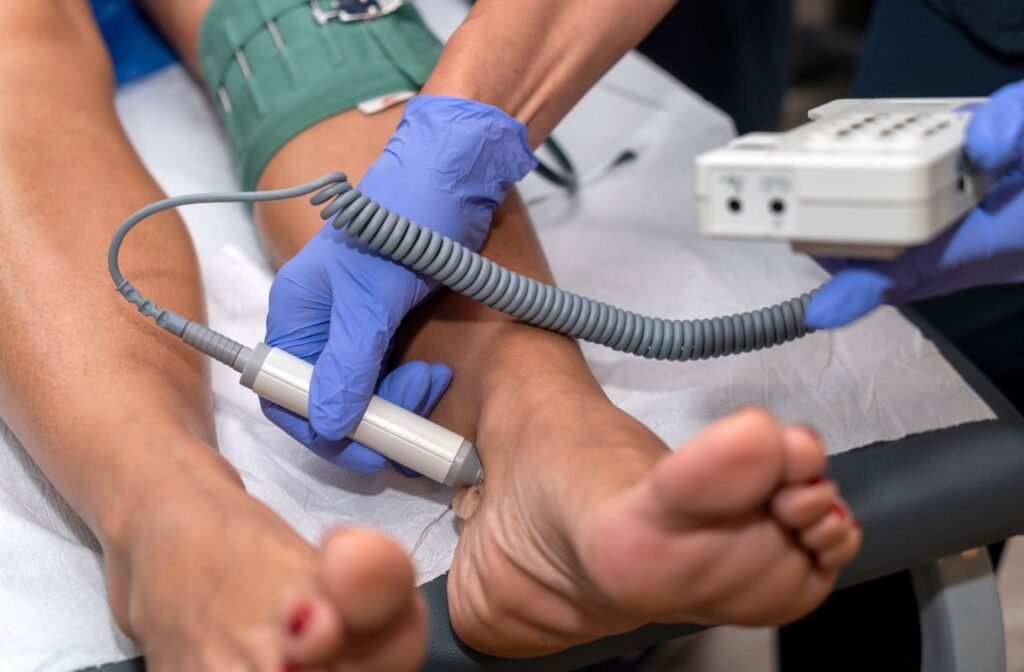
If the nerves in your feet are not receiving adequate blood supply, poor circulation can cause tingling feet and may reflect an underlying health condition affecting blood flow, and over time paresthesia can develop. This cause of pins and needles in your feet can be checked by your podiatrist. We will check for pulses in your feet, skin perfusion and can use a handheld ultrasound machine designed to analyse circulation status. Raynaud’s phenomenon can narrow blood vessels in the toes and trigger numbness or tingling. Results of this assessment can be relayed back to your GP who can provide you with advice on how to improve circulation, for example by walking to help restore blood flow to the feet. They may also refer you to a vascular surgeon if the circulation is very poor (known as peripheral arterial disease).
Medical and Lifestyle Reasons
Probably the most common medical reason for pins and needles in the feet is diabetes and diabetic neuropathy, and early diagnosis improves outcomes. Diabetes affects your body’s ability to control the levels of glucose present in your blood vessels, commonly raising it beyond normal levels in your blood flow. When blood sugar levels are high consistently, it can damage the nerves over time. Small nerves in your feet and hands and feet are usually affected first. Nerves will gradually lose the ability to detect light pressure, vibration and pain signals. This condition is known as Loss of Protective Sensation when mild and peripheral neuropathy when more extreme. Peripheral neuropathy leads to pins and needles. It also commonly results from infections and autoimmune diseases as an underlying condition linked to broader systemic diseases.
Multiple sclerosis can also cause tingling in the feet, and these symptoms may be part of a chronic condition affecting the nervous system. Other factors known to lead to a degradation of the peripheral nerves include chronic alcohol abuse (alcoholic neuropathy), exposure to toxic chemicals and low levels of vitamin B12 (naturally found in red meat, fish and dairy), sometimes causing numbness in the hands and feet. These factors can be screened for and managed by your GP, sometimes with certain medications able to provide relief. Numbness in the feet may occur with other symptoms and can occasionally signal serious conditions such as strokes, so prompt medical review matters.

How to get rid of pins and needles in your feet
Treatment options for pins and needles in the feet depend on the underlying cause. For example, if it is due to poor circulation, healthy lifestyle changes or a referral to a vascular specialist may help. If it is due to nerve compression, physical therapy or orthotic inserts may be recommended.
If you experience persistent pins and needles in your feet, or tingling or numbness lasting more than a few days, it is important to seek medical attention to identify any underlying condition and receive appropriate treatment. Seeing your local podiatrist at Advance Foot Clinic is a great first step. We can diagnose the potential cause and provide treatment and recommendations to suit your individual situation.
How can a podiatrist get rid of pins and needles in feet?
If you are experiencing pins and needles in the feet, our podiatrists have the experience to help. We can conduct a physical exam, diagnose and treat most conditions affecting the lower limbs, and have convenient early morning, evening and weekend appointments available. You can book an appointment online or call 1300 76 33 66.