


Tl;dr What causes dry feet?
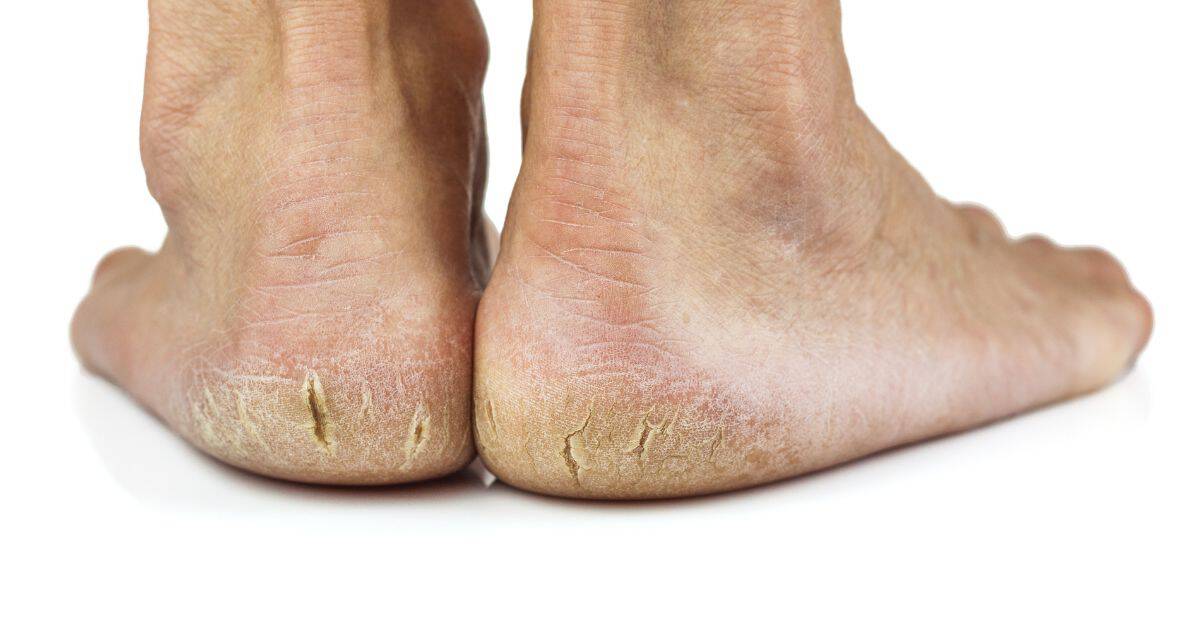
Have you experienced dry feet? Dry feet are common on the heels and soles because these areas have fewer oil glands than skin elsewhere on the body, sit under constant pressure, and can lose moisture from heat and humidity, exposure to the elements, hot or prolonged water, harsh or missing skin care, the wrong footwear, or skin conditions such as eczema, psoriasis and athlete’s foot. Ageing also reduces collagen production, leaving skin thinner and less able to retain water effectively. These changes can also make foot skin thicken and crack.
If you are dealing with dry, cracked, flaky, hardened or scaly skin on your feet, this guide explains the most common causes and the treatments and products that can help. That matters because dry feet are not just annoying or embarrassing—they can become painful, lead to deep cracks, and raise the risk of infection if you leave them untreated.
Heat and Humidity
Heat and humidity draw moisture from the skin, which can lead to dry skin, thick or cracked areas on the feet. Watch out for shoes and socks that make your feet sweat, as the heat and humidity in there will dry out your skin, and humidity inside shoes contributes to this effect. Contrary to popular belief, the more your feet sweat, the drier the actual skin becomes as the natural internal moisture is drawn out onto the surface layer of your skin. Skin dryness from humidity is a particular concern for those of us in Queensland! Environmental factors such as heat and UV rays can dry out the skin on your feet. It is common to see people with dry, cracked heels yet with tinea pedis between their toes due to the humid environment our feet are in daily. So ditch those sweaty socks and opt for breathable socks and shoes instead!
Exposure to the Elements
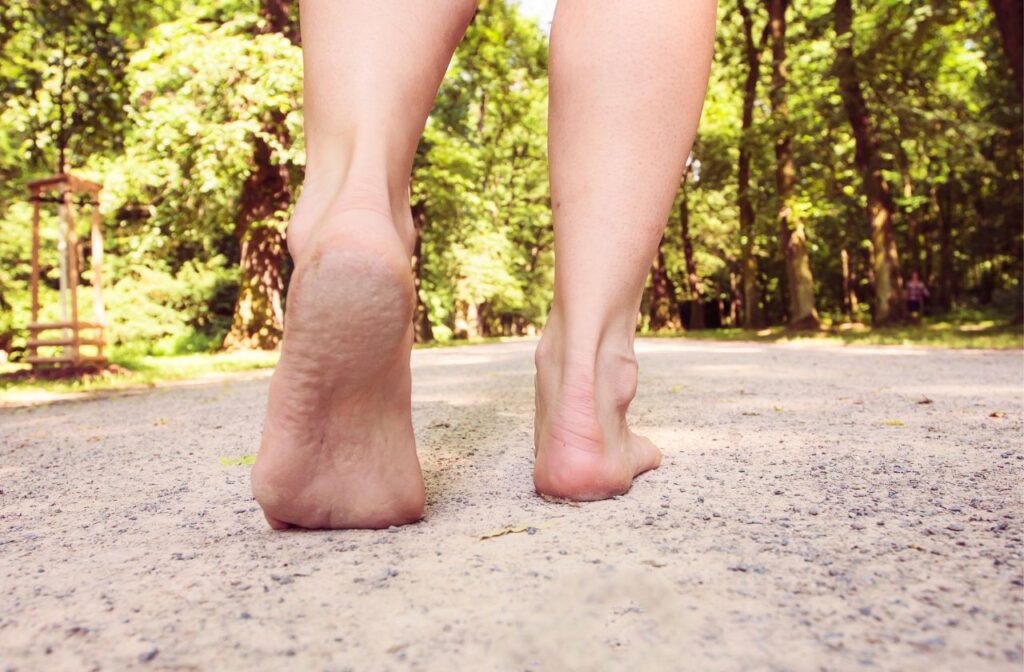
Even though you feel great walking around in sandals or strolling barefoot, your skin might not feel the same. Whether it’s a hot, humid summer or cold weather, exposure to natural elements can strip your skin of the limited moisture it’s holding onto, while sandals often lack shock absorption, increasing impact on the soles and contributing to skin dryness by disrupting the skin’s protective oils and creating rough patches. Walking barefoot or in improper footwear is also a surefire way to develop thick skin on the soles of your feet, especially around pressure points, which can easily lead to dry cracked feet and cracked heels as this rough skin loses the normal elasticity of healthy skin and forms deep cracks as a result of pressure. Thongs/Flip-flops also commonly lead to dry and cracked heels.
Hot Water
Actually not just hot water, but water in general. Drinking plenty of water helps you stay hydrated, but too much water on your skin can actually have a dehydrating effect leading to cracked heels and dry feet. Long baths or showers can strip out the natural oils from your skin and can leave skin feeling rough, flakey and dry. Water that’s too hot simply adds to the issue, sapping moisture by causing your feet to sweat. So keep the temperature down a little. It doesn’t have to be lukewarm water, but if you use foot soaks, keep them to warm water for 5-10 minutes and limit exposure to excessively hot water for long periods as much as you can.

Using the wrong products (or no products at all)
As mentioned above, water washes away your skin’s natural oils, essentially causing dryness and dehydration. This issue can be made even worse if you’re using harsh soaps, which pull even more moisture from the skin, leading to further dryness and causing it to feel tight and dry. Try a moisturising body wash instead such as QV or Sorbolene wash, especially gentle formulas for sensitive skin and to support the skin barrier.
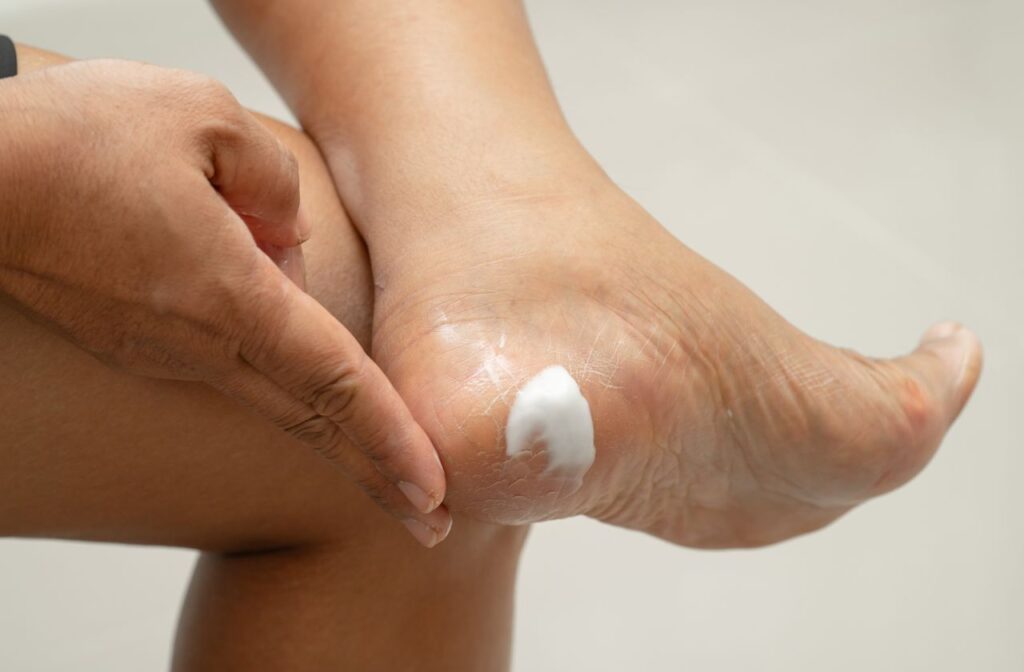
If you have dry skin you should apply moisturiser daily. Exfoliate feet regularly to remove dead skin buildup. Apply directly after your shower, when your skin is still a little bit damp, to lock in the moisture and reduce or prevent cracks and dry skin. A pumice stone can also be used gently after washing or soaking to slough off hardened skin and remove dead skin cells. Before bed, apply a thick foot cream for overnight hydration; petroleum jelly can also form a protective barrier and help leave soft feet.
Advance Foot Clinic stocks what we consider to be the best cream, but when choosing a foot cream, look for moisturizing ingredients and active ingredients that suit very dry feet. Ingredients like hyaluronic acid can help draw in moisture, while salicylic acid or alpha hydroxy acids can help loosen dead skin and dead cells. Cream Mousse in 5%, 10% and 15% urea absorbs in and feels dry to the touch. Our clinics have found the creams we stock particularly beneficial for rough, cracked and dry skin. It is also recommended for diabetic foot care.
Wearing the wrong footwear
Wearing shoes that don’t provide adequate support, are the wrong size, don’t let feet breathe or rub against your skin can trigger dryness, and improper footwear can make an existing problem even worse and painful.
Unsupportive shoes put constant pressure on certain areas of the foot, creating pressure points, and even allow fat under your heels to expand and migrate; loss of fat pads in feet can also make heels more vulnerable to cracking. The result is skin that becomes dry, callused and rough. Likewise, shoes that rub cause friction on the skin, leading to blisters, irritation and dryness which can all lead to infection in severe cases.
Look for proper footwear with adequate support, breathable materials and ensure you’re wearing the correct size. Natural fibre socks will also help, like cotton socks or bamboo socks. If you do have any blisters, wounds or deep cracks in heels ensure they are covered with a dressing or liquid bandages.
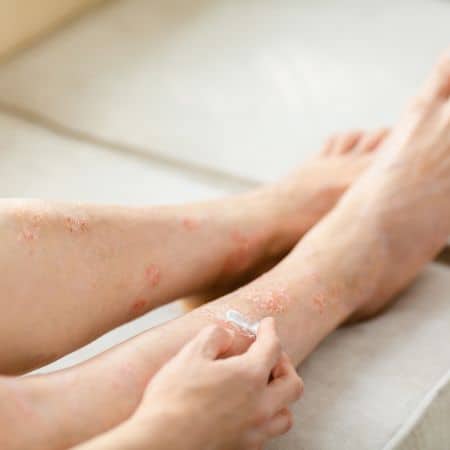
Eczema and Psoriasis
Both Eczema and Psoriasis are skin conditions that cause redness, dry skin, itchiness and patchiness that come and go in flare ups. They can be incredibly frustrating to deal with, especially when feet become extremely dry. These conditions are generally linked to your immune system and are often misdiagnosed as a fungal infection.
If you believe you have eczema and/or psoriasis, seek a dermatologist for diagnosis. Skin conditions can have many overlapping symptoms and only a qualified professional will be able to advise on the correct course of treatment. Genetics can also contribute to persistent very dry skin on the feet.
Athlete's Foot (Tinea Pedis)
Athlete’s Foot is very common. Properly known as Tinea Pedis, it is a itchy fungal infection and spreads very easily. You will notice a rash that is red, scaly and dry that peels and feels itchy. If you have underlying medical conditions, inspect your feet daily as your risk of catching infection is higher. Tinea Pedis Commonly presents on the sides of the heels and in the webbing of toes. Fungus thrive in humid areas and often spread in pools and communal showers. It can also spread through soil and even in the air.
If you find you have Athlete’s Foot, there are plenty of effective over-the-counter antifungal medications that should clear it up. Some medical conditions, including thyroid disease and diabetes, can interfere with treatment, leaving feet dry when symptoms keep coming back.
These days there are even options without the need for medication, such as laser treatment. Your podiatrist will be able to advise you on the best course of treatment, and should be consulted if home care does not improve the severity or if symptoms persist.
Podiatrist Treatment for dry feet
Dry feet are a common issue, especially on the heels and soles, often caused by heat and humidity, prolonged water exposure, harsh skincare products, and poorly fitting or non-breathable footwear. These factors strip the skin of natural oils, leading to dry, cracked heels, flaky skin, and thickened calluses. Walking barefoot or wearing open shoes can worsen dryness, while conditions like eczema, psoriasis, and athlete’s foot (tinea pedis) may also contribute. Without proper care, dry feet can become painful and increase the risk of infection.
If you’re dealing with persistent dry or cracked feet, seeing a Brisbane podiatrist can help. At Advance Foot Clinic, our podiatrists provide tailored treatments and advice to restore skin health and prevent ongoing issues.