

Sport Podiatrist
Treatment and prevention of lower limb sports injuries
Sport and physical activity place significant demands on the feet and lower limbs. Injuries to the foot, ankle, knee, and leg are among the most common reasons active people seek podiatry care. Podiatrists are trained to assess and manage these injuries, identify the underlying cause, and help patients return to activity safely.
Sports podiatry is relevant to anyone who is active, not just elite or competitive athletes. Whether you run recreationally, play a team sport on weekends, or go to the gym regularly, a podiatrist can help when lower limb pain is getting in the way.

What does a sports podiatrist do?
A sports podiatrist focuses on how the feet and lower limbs respond under load, which is where this area of podiatry differs from more general care. While general podiatry looks at skin and nail concerns and everyday foot pain, sports podiatry is more focused on movement, performance, and how repeated stress from activity impacts the body over time.
That means the assessment goes beyond the injury itself. It includes how you move, how your joints and muscles are working together, what footwear you are using, and how your training or activity levels have changed. Small changes in load, technique, or recovery can be enough to trigger pain or discomfort, even when nothing obvious has caused the issue.
From there, management is about both settling the injury and adjusting the factors that led to it, so when you get back to running, sport, or the gym, you are not stepping straight into the same pattern.
Who this service is for
Sports podiatry is appropriate for anyone experiencing foot or lower limb pain related to physical activity. Common presentations include:
- Runners experiencing heel, shin, or knee pain
- Team sport athletes with ankle sprains or foot injuries
- Gym goers, cyclists, and triathletes
- People returning to exercise after an injury or a period of inactivity
- Anyone experiencing lower limb pain that is starting to limit how they train, compete, or go about their daily activities
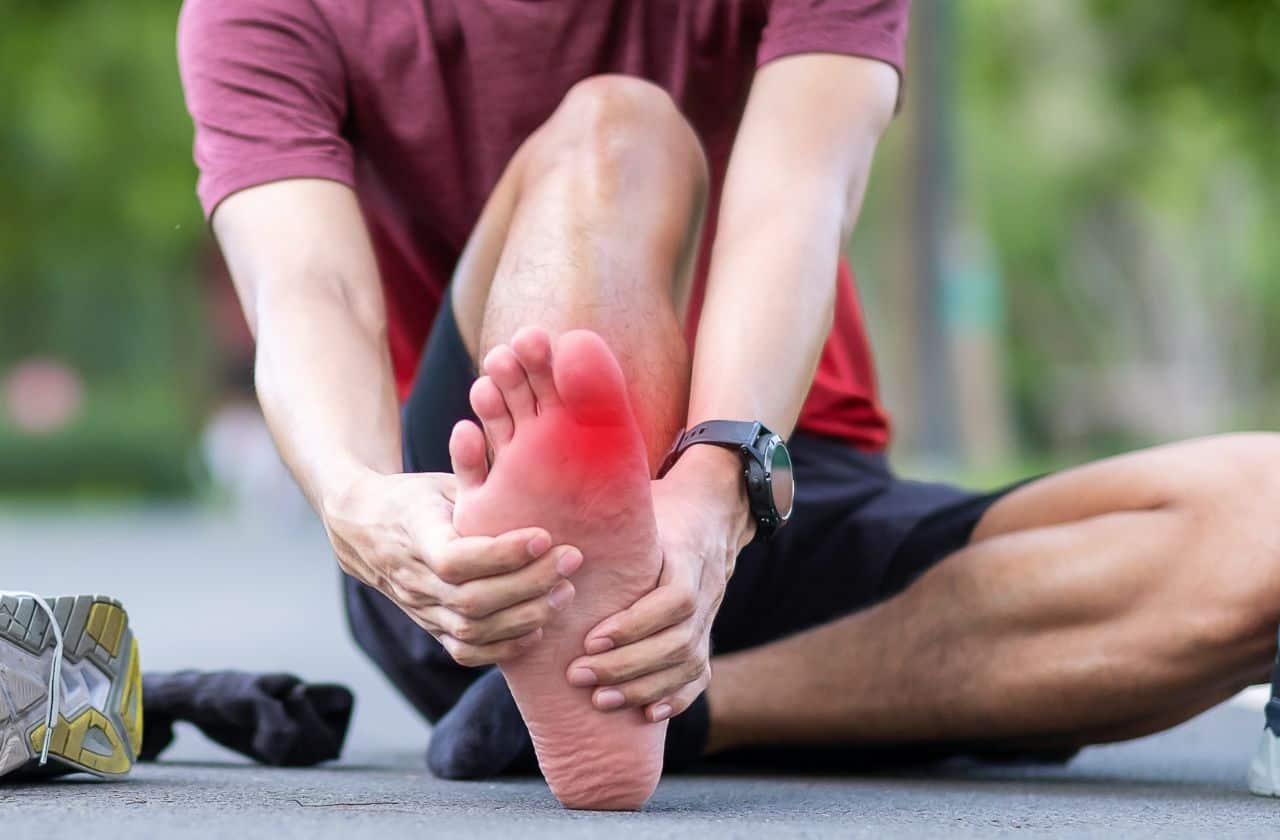
Common injuries we treat
When you see a podiatrist they will conduct a neurovascular screening on your feet. This is a very important part of caring for diabetic feet. The simple and painless tests will give a good indication of the state of the blood supply and nerve function in your feet. Problems can be detected early. Results reported back to your GP for management. Based on the results of the tests, your podiatrist will tell you how often you should have this neurovascular screening done. At a minimum, it should be repeated once a year.
An ankle sprain happens when the ligaments around the ankle are stretched or torn, most often when the foot rolls outward, and the ankle turns in. One of the most common sports injuries, they can range from mild to more severe injuries involving significant ligament damage, and sometimes the surrounding tendons as well. Sprains that are not properly rehabilitated often lead to ongoing instability, with the ankle feeling weak or giving way during activity.
Achilles tendonitis usually presents as soreness or swelling at the back of the heel or lower leg, where the tendon becomes irritated from repeated load. It often comes on after a spike in activity that the body hasn’t quite adapted to, but it can also be triggered by changes in footwear, work demands, or the surfaces you’re training on. Management involves careful load modification alongside targeted treatment and rehabilitation.
Other conditions we commonly see
- Iliotibial Band Syndrome (ITBS): commonly presents as pain on the outside of the knee, especially in runners and cyclists, where repeated bending and straightening of the knee cause the band along the thigh to rub and become irritated.
- Patellofemoral Pain Syndrome: causes pain around or behind the kneecap, often linked to how the knee moves and tracks during activity.
- Compartment Syndrome: presents as pain and tightness during exercise as pressure builds within the muscle, limiting blood flow to the surrounding tissues.
- Turf Toe: injury to the big toe joint caused by it being pushed upward beyond its normal range, often during sports like football, rugby, or athletics.
- Stress Fractures: small bone cracks from repetitive loading, most often in the metatarsals, tibia, or navicular; usually require imaging and a period of protected weight bearing
Conditions like plantar fasciitis, tibialis anterior tendinopathy, and posterior tibial tendon dysfunction are also frequently seen in active patients and can be significantly aggravated by training load.
When to see a sports podiatrist
You should consider seeing a sports podiatrist if you have:
- Heel, arch, shin, ankle, or knee pain during or after exercise
- An ankle sprain that is not improving after a few days
- A recurring injury that keeps returning once you resume activity
- Pain that is affecting your training, sleep, or day-to-day function
- Any concern about a possible stress fracture or bone injury
Our sports podiatry assessment
At your initial appointment, your podiatrist will review your injury history and your activity background. This is followed by a clinical assessment, which may include:
- Postural and biomechanical assessment of the foot and lower limb
- Gait observation and, where relevant, running or movement analysis
- Hands-on examination including palpation, range of motion, and orthopaedic testing
- Review of your current footwear, including any sport-specific boots
A clear diagnosis and management plan will be discussed before you leave. Your podiatrist will explain what is contributing to the injury and outline a realistic pathway back to activity.
Please bring your exercise footwear to your first appointment, including any sport-specific boots. Also, bring any existing orthotics or insoles, and any previous imaging results relevant to the injury.
How we treat sports injuries
Low-level laser therapy uses targeted light energy to support tissue repair and reduce inflammation. It is most commonly used in the acute stages of injury, where it can assist with pain management and early healing of soft tissue damage. It is non-invasive and painless, with no recovery time required.
Extracorporeal and radial shockwave therapy uses pulses of acoustic energy to stimulate the body’s natural healing response in damaged or long-standing tissue. It’s commonly used for chronic conditions, helping to improve blood flow, support tissue repair, and ease ongoing inflammation, particularly in cases like achilles tendinopathy and plantar fasciitis.
Custom foot orthotics are prescription insoles designed to modify load distribution through the foot and lower limb. In sports podiatry, they are used to address biomechanical contributors to injury, such as excessive pronation or poor arch support, as part of a broader treatment plan. Your podiatrist will only prescribe orthotics where clinically indicated following a full biomechanical assessment.
We also offer
- Footwear advice that reflects how you move and play, with sport and position considered, from runners to footy boots.
- Strapping for the foot, ankle, and knee to provide short-term support during activity
- Referrals for imaging, including ultrasound and X-ray, when further investigation is needed
- Fitting of moon boots for more significant injuries, such as severe sprains or fractures
Why sports injuries keep coming back
Many patients present having already tried rest, only for the injury to return as soon as training resumes. In most cases, this comes back to injury prevention not being properly addressed, with the focus on pain relief rather than understanding and managing the underlying cause.
Common reasons injuries recur include:
- The contributing factors were not identified or treated. Rest reduces pain but does not fix a biomechanical issue, footwear problem, or training error.
- Return to sport happened too soon. Pain settling does not mean full structural recovery. Tendons, bones, and ligaments each have their own healing timelines and require progressive reloading before they can handle the demands of training.
- Strengthening and rehabilitation were not completed. A reloading program is an important part of recovery for most sports injuries. Without it, the tissue remains vulnerable when load increases again.
- Training load was increased too quickly. A sharp spike in volume or intensity is one of the most consistent contributors to overuse injury, regardless of foot structure or footwear.
Your podiatrist will go through these factors with you to make sure you’re easing back into activity in a way your body can actually tolerate.
Why choose Advance Foot Clinic & Podiatry to treat your sports injury
Experienced sports podiatrists
Our registered podiatrists have extensive experience assessing and managing sports injuries, from acute presentations to long-standing conditions that haven’t responded to previous treatment.
More than just pain relief
We’re here to get to the bottom of what’s actually causing your pain, then build a plan focused on fixing it, injury prevention, and getting you back on your feet.
Advanced treatment options
Our clinics are equipped with a range of advanced treatment options to support recovery, whether you’re dealing with an acute injury or something that you’ve been managing for a while.
Flexible funding options
We see patients through a range of funding options, including NDIS, Medicare, DVA, and concession rates, making it easier to access the care you need.
Five Queensland clinics
With locations in Arana Hills, Bellbowrie, Chermside, The Gap, and Mount Isa, it’s easy to find a clinic that works for you.
Award-winning local practice
We’re a recognised and trusted Queensland podiatry provider, having been acknowledged at both the 2025 Australian Small Business Champion Awards and the 2025 Local Business Awards.
Frequently asked questions
Not always. In many cases, training can continue in a modified way while the injury settles, rather than stopping completely. This usually involves adjusting load, intensity, or type of activity so you’re not aggravating the area, while still maintaining some level of fitness.
Iliotibial Band Syndrome, often referred to as iliotibial band friction syndrome, is a common overuse injury that shows up as a dull or sharp pain on the outside of the knee, particularly in runners and cyclists. It generally worsens over time as the band along the outside of the thigh becomes irritated from repeated bending and straightening of the knee, often alongside factors like changes in training load, running downhill, or hip abductor weakness.
A podiatrist looks at how your body is moving under load and works through what’s contributing to that irritation. That can include your training habits, running style, footwear, and how your foot and lower limb are working together, with the aim of reducing the strain and helping you return to activity without it continuing to flare up.
In most cases, it’s not one thing, but a combination of factors like a sudden increase in training load, poor recovery, footwear that doesn’t suit your activity, and how your body moves under load. Things like hip strength, control through the upper leg, and running technique can all contribute.
It varies depending on the tissue involved and how it’s being managed. Muscle and tendon issues can take weeks to months, while bone-related injuries like stress fractures often take longer and need more protection early on.
Not always. Many of the most common injuries can be diagnosed clinically, but imaging can be helpful if there’s concern around more serious issues like a stress fracture, or if pain isn’t improving as expected.
A general podiatrist focuses more on everyday foot care, like skin and nail concerns, and general pain, while a sports podiatrist looks more closely at how your feet, knee joints, and lower limbs handle load during activity. The assessment tends to go further into movement, training habits, and performance, particularly for injuries linked to running, sport, or the gym.
If you’re unable to put weight through the foot, there’s significant swelling or bruising, or the ankle feels very unstable, it’s worth having it assessed early. Milder sprains can still cause ongoing issues and long-term chronic pain if they’re not managed properly, so it’s not just the severe ones that need attention.
In some cases, yes, particularly if your injury would benefit from more hands-on or manual therapy as part of the rehab process. We’ll guide you on this during your assessment, and if working alongside a physiotherapist or physical therapist would support your recovery, we’ll let you know and help coordinate that approach.
Yes. Children and adolescents are actually quite prone to certain lower limb injuries as they grow and become more active. Their bones and soft tissues are still developing, which can make them more vulnerable to conditions like heel pain and knee pain during sport.
Growth-related conditions tend to respond well when picked up early, so if your child is regularly sore during or after activity, it’s worth having it assessed. Visit our Children’s Podiatry page to find out more.
Dealing with a sports injury? Let's sort it out.
Book in at one of our five Queensland clinics and we’ll get started on a plan to get you back on your feet.